St Mark's Basilica TicketsTickets & Tours
Venice · Since the 9th century

The History of St Mark’s Basilica

St Mark’s is easier to understand once you know why it looks so different from most Italian churches. Relics from Alexandria, a Byzantine-inspired plan, centuries of mosaics and objects brought from Constantinople all shaped the building. Seven moments explain most of what you will actually notice when you visit.

Relics arrive 9th century
Present church begun 1063
Consecrated 1094
Cathedral from 1807
The story

Seven moments that explain the Basilica you see today

The building was never frozen in one historical moment. Its architecture, mosaics, sculpture and treasury reflect Venice’s changing relationship with the eastern Mediterranean, the Doges and the city’s own political identity.

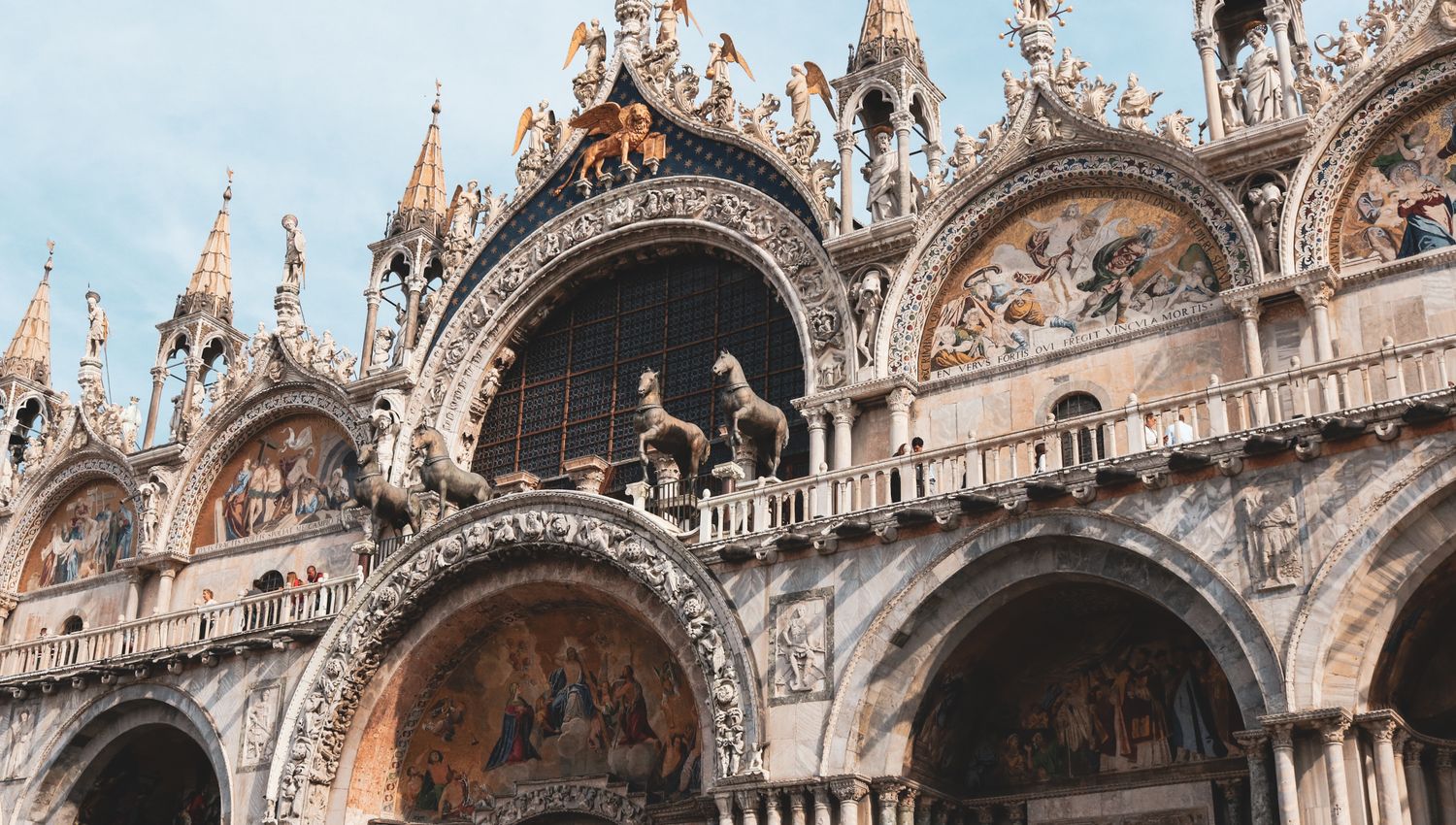
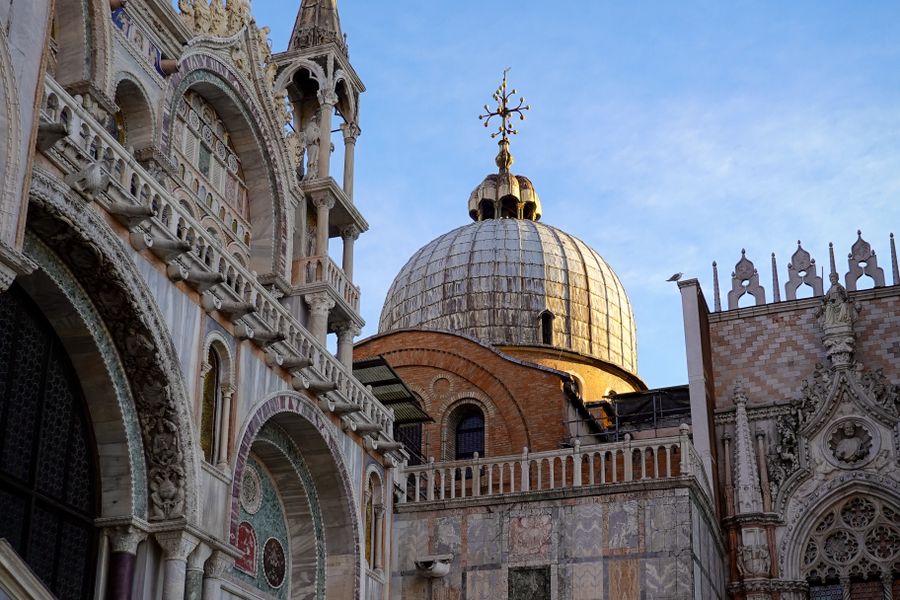
Byzantine style mosaic and marble detail at St Mark's Basilica
Why does St Mark’s look eastern? The present church was designed on a Byzantine model associated with Constantinople. Its Greek-cross form and domed structure make that connection visible before you even reach the mosaics.
  • 829

    The relics of St Mark arrive in Venice

    Venetian tradition records the transfer of the body of St Mark from Alexandria to Venice. The relics gave the growing city an apostolic patron of enormous religious and political importance and led to the creation of a church beside the Doge’s residence.

  • 976–978

    Fire destroys the earlier church

    During a revolt against Doge Pietro Candiano IV, fire spread from the Doge’s Palace and destroyed the earlier church. The Basilica you visit today is not that original ninth-century building.

  • 1063

    Reconstruction of the present Basilica begins

    The current church was rebuilt on a Byzantine-inspired plan associated with the Apostoleion in Constantinople. The Greek-cross layout and five-domed form are central to why St Mark’s feels so different from many other major Italian churches.

  • 1094

    The new church is consecrated

    The Basilica was consecrated in 1094, but its visual story was far from finished. Mosaic decoration had already begun and would continue to develop over centuries, which is why different artistic styles can be seen across the building.

  • 1204

    The Fourth Crusade transforms the Basilica

    After the conquest of Constantinople, precious marbles and works of art were brought to Venice. The famous horses, objects now associated with the Treasury, enamels connected with the Pala d’Oro and large quantities of decorative stone became part of St Mark’s visual identity.

  • Medieval era

    The Pala d’Oro becomes a layered masterpiece

    The famous golden altarpiece was not created in one moment. Byzantine enamels and later Venetian additions were assembled and reworked across generations, making the Pala d’Oro a physical record of Venice’s long relationship with the eastern Mediterranean.

  • 1807

    St Mark’s becomes Venice’s cathedral

    For most of the Venetian Republic, St Mark’s functioned as the Doge’s chapel and a church of state rather than as the city’s cathedral. In 1807 the seat of the Patriarch of Venice was transferred here from San Pietro di Castello.

History you can actually use

Four things the history changes about your visit

The useful point of learning the history before you go is not memorising dates. It is knowing why certain areas, objects and ticket upgrades are worth your attention once you are inside.

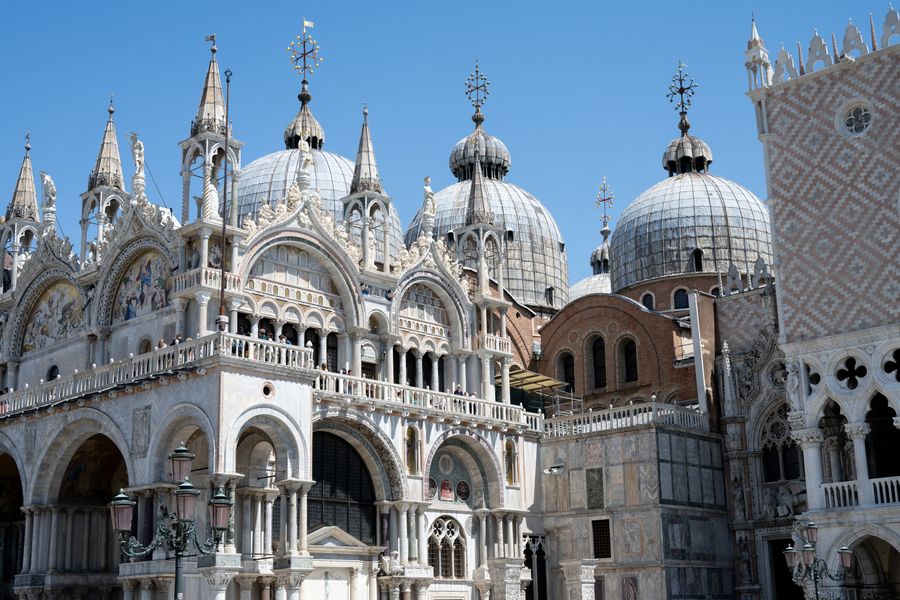
Upper facade and domes of St Mark's Basilica Venice
The horses outside are replicas. The historic quadriga is preserved upstairs in the Museum, so Museum access matters if that is one of the objects you came to see.
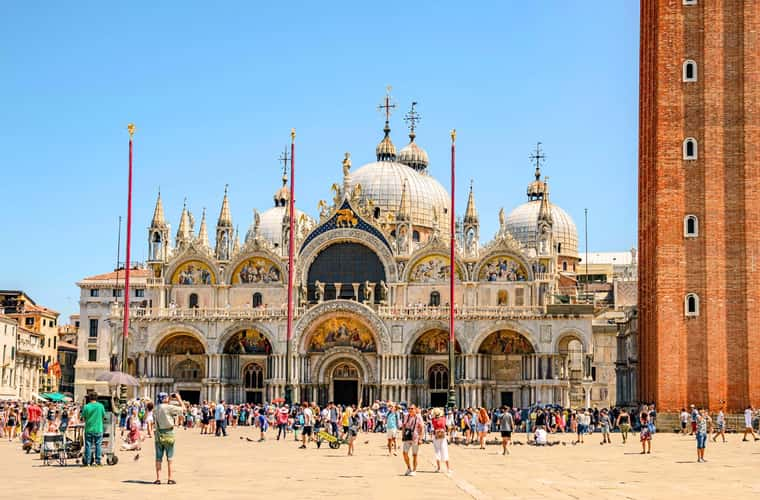
St Mark's Basilica in Piazza San Marco Venice
It remains a working church. Religious services still shape visitor hours, especially on Sundays and holy days.
Mosaics

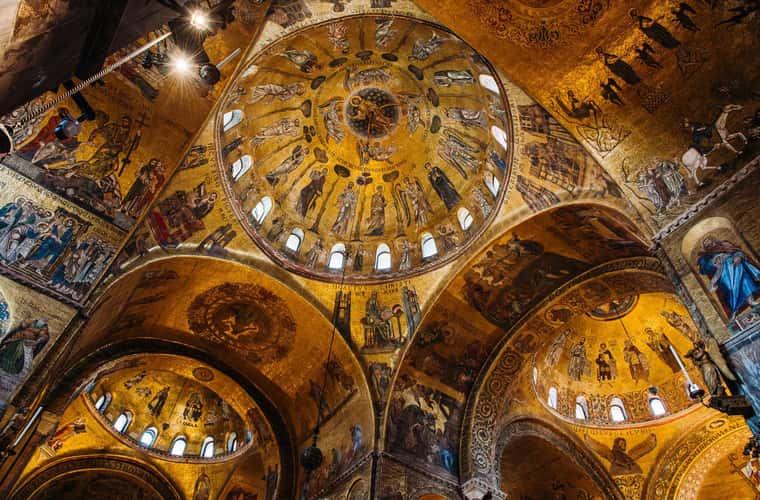
They are a visual narrative, not simply a gold ceiling

Knowing that the decoration developed as a religious storytelling system changes how you look at the interior. Start observing the imagery from the atrium rather than waiting until you reach the centre of the church. See what to see inside St Mark’s Basilica.
Museum

The horses on the façade are not the originals

The historic horses are displayed upstairs in the Museum. If the quadriga is one of your priorities, standard Basilica admission alone does not give you the full experience you are looking for.

Pala d’Oro

The altarpiece makes more sense once you know its eastern history

Its Byzantine enamels and later Venetian additions reflect the same cultural exchange visible throughout the Basilica. The Pala d’Oro is separately ticketed unless included in your chosen combination.

Sunday visits

The Basilica is still used for worship

On Sundays and national holy days the main Basilica currently opens to tourist visitors from 14:00, while the Museum and Horses Loggia can open earlier. That distinction matters when building a morning itinerary.

!
History can save you from buying the wrong ticket.

If you specifically want the original horses, Museum access matters. If the Pala d’Oro is a priority, make sure it is explicitly included. If you only want the main mosaics and architecture, a simpler Basilica ticket may be enough.

Use the story while you are inside

Three ways to turn the history into a better visit

01 Read the building from west to east

Start with the atrium and then follow the imagery toward the main church rather than rushing immediately toward the altar.

02 Treat Museum access as a different experience

The upper route gives closer access to historical objects and a different architectural perspective than the main-floor visit.

03 Connect St Mark’s with the Doge’s Palace

The Basilica was tied directly to Venice’s political life. Visiting the Doge’s Palace as well makes the relationship between church and state much easier to understand.

Tickets & guided tours

Three ways to experience the history in person

A guide is most useful when you want the historical relationship between the Basilica, Doge’s Palace and Venetian state explained. If you prefer to read beforehand and explore independently, a simpler timed-entry option may be enough.

St Mark's Basilica and Doge's Palace guided tour Strong guided option
★ 4.7 · 3,917 reviews*

St Mark’s Basilica & Doge’s Palace Tour with Ticket

A strong fit for this history page because it connects the Basilica with the political centre next door, rather than treating the church as an isolated monument.

From €72 per person*
View tickets →
Doge's Palace and St Mark's guided tour with upgrade option Another guided choice
★ 4.7 · 2,515 reviews*

Doge’s Palace & St Mark’s Tour with Upgrade Option

Another useful combination if you want the political and religious history of Piazza San Marco explained together, with upgrade options depending on the selected booking.

From €71 per person*
View tickets →
St Mark's Basilica fast-track ticket Independent option
★ 4.1 · 1,795 reviews*

St Mark’s Basilica Fast-track Tickets & Tours

Best suited to visitors who prefer to read up beforehand and explore the Basilica independently instead of paying for a live historical guide.

From €19 per person*
View tickets →

*Prices, ratings, review counts, availability and inclusions can change. Check the live booking page before purchasing. Some links are affiliate links; we may earn a commission at no extra cost to you.

Continue planning

Use the history to decide what you actually want to see

The next useful step is choosing whether your priority is the mosaics, Pala d’Oro, Museum and horses, Loggia view, or a wider guided visit of Piazza San Marco.